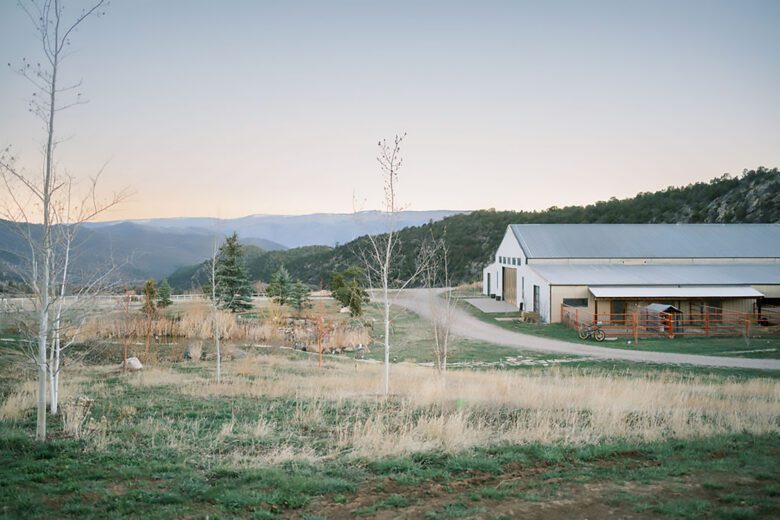

4Winds Farm is a private, women-only healing campus on 134 secluded acres in Glenwood Springs, Colorado. This article explains what a women’s residential trauma treatment program involves, how it differs from outpatient therapy and other levels of care. What may be offered during a stay, so women, families, and clinicians can make an informed, individualized decision.
What Residential Trauma Treatment Means
“Residential” simply means live-in care: a woman stays on-site for a defined period rather than attending scheduled appointments and returning home each day. For some women, that structure can make it easier to focus on therapeutic work without the daily interruptions of work, caregiving, and household responsibilities.
Residential trauma treatment is not the same as several other levels of care, and it’s worth naming the difference clearly:
- Outpatient therapy involves scheduled sessions while a woman continues to live at home; residential care replaces that schedule with a live-in structure for a defined stay.
- Hospitals and crisis stabilization units are designed to manage acute psychiatric emergencies and immediate safety concerns. 4Winds Farm does not provide emergency or crisis-level psychiatric care.
- Detox and substance-use treatment programs are designed specifically to manage withdrawal and addiction. 4Winds Farm does not provide medical detox or substance-use treatment.
- Medical treatment facilities address physical health conditions; 4Winds Farm’s focus is trauma-informed mental health care, not medical treatment.
At 4Winds Farm, residential programs generally run 30 to 90 days. The farm also offers shorter formats, brief retreats and week-long intensives, which are structured differently from a full residential stay and are typically used for a more focused, time-limited experience rather than sustained daily clinical care. Anyone considering a program should confirm directly with the admissions team which format best matches their needs.
How Trauma Can Affect Daily Life
Trauma can affect people differently. For some women, it may show up as difficulty regulating emotion, tension in relationships, or fatigue that doesn’t resolve with rest. These experiences are not a diagnosis in themselves, and only a licensed clinician can assess what a person is experiencing and recommend a course of care.
Who Considers a Women’s Residential Program
Women who consider residential care come from many backgrounds, including women in demanding roles, such as executives, physicians, mothers, and caregivers, who continue to manage responsibilities while also carrying unresolved trauma. Functioning well in daily life and living with trauma symptoms are not mutually exclusive, and one does not rule out the other.
Is Residential Care the Right Fit?
Whether residential care is appropriate for a given person is an individualized clinical decision, made together with a licensed clinical team during an intake assessment, not something determined by a general checklist. That assessment typically considers a woman’s current symptoms, history, prior treatment, and support needs, and may also determine that a different level of care is more appropriate.
Women exploring this question sometimes describe patterns such as ongoing outpatient care that hasn’t produced the outcome they hoped for, or a sense that they need dedicated time away from daily obligations to focus on their mental health. Sharing these details with a clinical team, rather than self-diagnosing, is the appropriate starting point.
Therapies Offered in Residential Mental Health Programs for Women
Programs at 4Winds Farm are designed around licensed clinical care alongside complementary, body-based, and experiential approaches. Depending on individual treatment planning, care may include:
- Licensed individual trauma therapy
- Somatic Experiencing®
- Nervous-system regulation support
- Group therapy for shared processing and integration
- Equine-assisted experiential therapy
- Breathwork and other embodied practices
- Jungian-informed shadow exploration
- Nature-based experiences on the campus
Where clinically appropriate and permitted under applicable law, psychedelic-assisted therapy may also be offered as part of an individualized treatment plan, under licensed clinical supervision. It is not a component of every stay, and eligibility is determined case by case.
This is a somatic trauma treatment approach for women in the sense that it pairs licensed mental health care with body-based practice; it is one part of a broader, individualized plan, not a stand-alone or guaranteed method. No single therapy works the same way for every person, and outcomes vary based on individual circumstances.
What a Day Can Look Like
Daily structure varies by program and by individual treatment plan, but commonly includes a mix of:
- Individual sessions with a licensed therapist
- Group therapy or peer processing
- Somatic or embodied practice
- Time outdoors on the campus grounds
The specific mix, sequence, and duration of these elements are determined by the clinical team based on each woman’s plan.
The Campus: A Women-Only, Private Setting
4Winds Farm operates on 134 secluded acres in the Colorado Rockies, exclusively for women. The campus offers a private setting with clinicians, facilitators, and other women moving through their own treatment on-site.
Privacy is a meaningful consideration for many women deciding whether to seek care, and a women-only, secluded setting can offer a degree of confidentiality that some women value. That said, privacy and setting are only part of what determines whether a program is a good fit; the clinical structure and staffing matter as much as the location.
Choosing a Program: Questions Worth Asking
Rather than comparing programs on convenience or marketing alone, families and clinicians evaluating residential mental health programs for women may find it useful to ask directly:
- What licensed clinical staff are involved, and what is their role in daily care?
- How are individual and group therapies sequenced over the course of a stay?
- What is the program’s policy on privacy and confidentiality?
- What levels of care does the program not provide (for example, medical detox, crisis stabilization, or acute psychiatric care), and what is the plan if a client needs one of those instead?
- How is eligibility determined, and by whom?
A program that answers these questions clearly, and is candid about what it does not treat, is easier to evaluate honestly.
Next Steps
Women’s residential services vary in scope and level of care, and residential treatment should be considered with individual clinical needs in mind. To ask whether a current 4Winds Farm program may fit your needs, call 970-279-1114 or email admissions@4winds.farm.