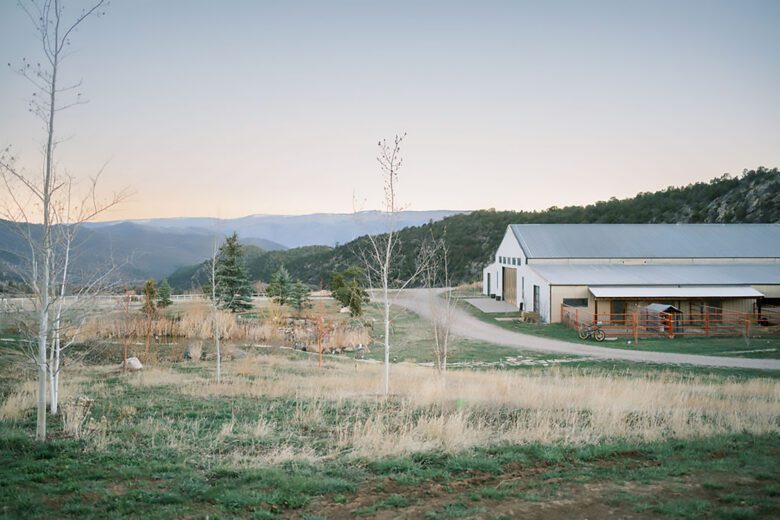

Trauma-informed care is a trauma recovery framework built around six principles identified by the Substance Abuse and Mental Health Services Administration (SAMHSA): safety; trustworthiness. Transparency; peer support; collaboration and mutuality; empowerment, voice and choice; and cultural, historical and gender considerations. Programs like 4Winds Farm, a private, women-only healing campus in Glenwood Springs, Colorado, draw on these principles alongside licensed clinical therapy and experiential practices to support women working through past trauma.
What Is Trauma-Informed Care?
Trauma-informed care describes a way of organizing support and treatment around an understanding of how past difficult experiences can shape a person’s responses, relationships, and coping patterns. Rather than asking “What’s wrong with you?”, a trauma-informed approach asks “What happened to you?”, considering a person’s history and current circumstances together, rather than focusing on symptoms in isolation.
This is not a diagnosis and not a substitute for a full clinical evaluation. It is a framework that can inform how care is structured and delivered, with the goal of avoiding practices that could feel unsafe, coercive, or dismissive to someone with a trauma history.
How Trauma-Informed Care Differs From Other Approaches
Many models of therapy focus primarily on a specific set of symptoms or goals. A trauma-informed approach can complement that work by also paying attention to the environment, pacing, and relationships surrounding treatment, for example, how an intake conversation is conducted, how much choice a client has in their own care, and how a physical space is designed. For some people, this added attention to safety and collaboration can make it easier to engage with therapeutic work already underway elsewhere.
The Six SAMHSA Principles of Trauma-Informed Care
SAMHSA outlines six principles meant to guide trauma-informed organizations and providers. The principles are intended to work together rather than stand alone.
- Safety: Staff and the people they serve feel physically and psychologically safe within the environment.
- Trustworthiness and transparency: Decisions and operations are conducted openly to build and maintain trust among clients, families, and staff.
- Peer support: Connection with others who have had similar experiences can help build trust and a shared sense of understanding.
- Collaboration and mutuality: Care is shaped through shared decision-making between clients and providers, rather than a one-directional process.
- Empowerment, voice, and choice: Clients are supported in having agency and choice in their own care.
- Cultural, historical, and gender considerations: Providers work to recognize bias, historical trauma, and the role of culture and gender in a person’s experience.
Why Safety Comes First
Safety is generally considered the foundational principle because the other five can be difficult to build without it. When a person does not feel physically or psychologically safe, it can be harder to engage in the trust-building, collaboration, and self-direction that the remaining principles depend on.
Retreats, Intensives, and Residential Care: Understanding the Difference
Trauma-informed programs take different forms, and the format matters when considering what may fit a person’s needs and schedule.
- Short retreats typically last a few days and offer education, community, and an introduction to trauma-informed and experiential practices.
- Week-long intensives provide a more concentrated block of individual and group work, often for people who cannot take an extended leave from daily responsibilities.
- Residential care, such as the program at 4Winds Farm, generally runs 30 to 90 days and allows time for ongoing individual therapy, group work, and daily integration within a structured, immersive setting.
These formats serve different purposes. A short retreat is not the same as extended residential care, and residential care is not the only option for someone whose goals may be better met by a shorter intensive. A person’s circumstances, support system at home, and goals can help inform which structure may be a reasonable fit.
Trauma-Informed Therapy for Women at 4Winds Farm
4Winds Farm is a private, women-only healing campus on 134 secluded acres near Glenwood Springs, Colorado. The residential setting is designed to offer privacy and distance from daily obligations while a woman works with a clinical team.
Depending on individual needs, care at 4Winds Farm may include:
- Licensed individual trauma therapy
- Somatic Experiencing®
- Nervous-system regulation practices
- Group integration sessions
- Equine-assisted experiential therapy
- Breathwork and other embodied practices
- Jungian-informed shadow exploration
- Nature-based experiences on the property
At 4Winds Farm, psychedelic-assisted therapy may be considered only where clinically appropriate and legally supported.
What 4Winds Farm Does Not Provide
4Winds Farm is not a substance use detoxification or treatment facility, and it does not provide care for acute psychiatric crises or medical treatment for physical health conditions. Anyone experiencing a mental health emergency or in need of medical detox should seek care from an appropriate emergency or medical provider. The admissions team can help clarify whether the program is a fit for a given situation.
What Safety Can Look Like in a Residential Setting
An immersive residential setting removes some of the day-to-day demands and visibility that can make it harder to focus on healing. At 4Winds Farm, the property’s seclusion is intended to reduce unplanned encounters and outside distractions, and the women-only community is designed so that clients are not required to explain their experiences to men in the space.
Structured routines, predictable scheduling, and a consistent care team can help some women feel more settled during treatment. This is not a guarantee of a particular outcome; recovery and each person’s experience of trauma differ, but it reflects the kind of environment the safety principle is meant to support.
How to Find Trauma-Informed Care That Fits Your Needs
Looking for trauma-informed therapy for women involves weighing both the clinical approach and the setting. Evidence-informed trauma care generally combines licensed clinical therapy with attention to safety, transparency, and choice, rather than relying on a single modality alone. Questions worth asking a program include:
- Is trauma-informed care integrated across the whole environment, or only in individual therapy sessions?
- What licensed clinical services are available, and who provides them?
- What experiential or complementary practices are offered, and are they optional?
- Is the setting residential, an intensive, or a short retreat, and does that match your current needs?
- How does the program describe its limits, including what conditions or crises it is not equipped to treat?
A program that can answer these questions clearly, and that is transparent about what it does and does not provide, is generally a sign of a trauma-informed philosophy in practice.
Conclusion
In closing, trauma-informed care is not a checklist but a living commitment. It’s one that honors safety, trust, choice, and connection at every turn. At 4Winds Farm, we hold this commitment on 134 acres of Colorado Rockies privacy, where clinical expertise and somatic wisdom meet to serve high-functioning women ready to move beyond symptom management. Here, healing unfolds at the pace of the nervous system, guided by both science and spirit, toward lasting internal safety and wholeness.