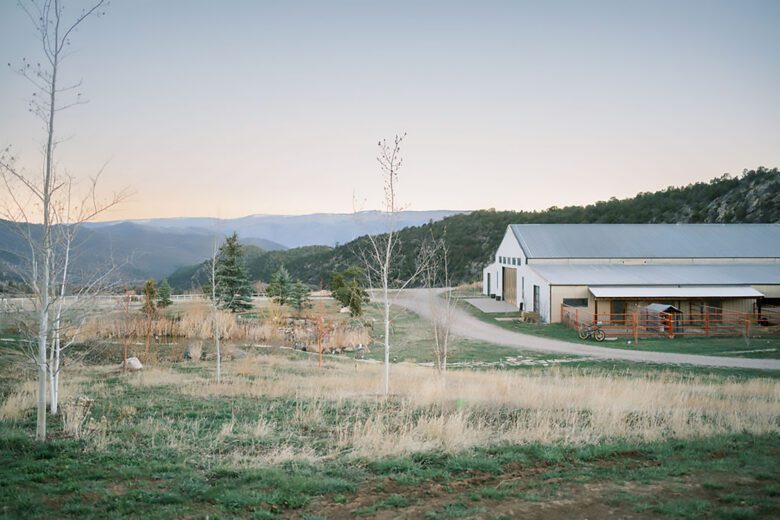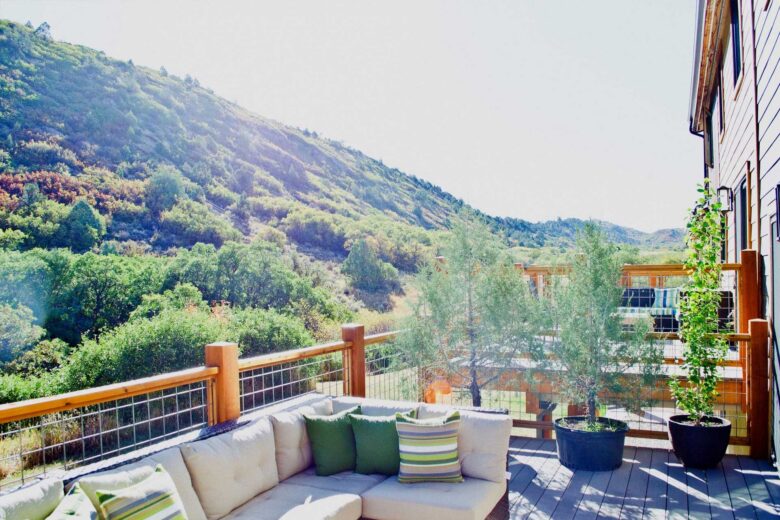

Therapy for women can take different forms, from weekly outpatient sessions to short retreats to longer residential care. 4Winds Farm is a private, women-only healing campus on 134 secluded acres in Glenwood Springs, Colorado, offering trauma-informed care that combines licensed clinical therapy with somatic and experiential practices. Residential programs generally run 30 to 90 days, and shorter retreats or week-long intensives are also available for women considering a different pace of support.
Why Does Therapy for Women Look Different?
Women arrive at therapy with different histories, responsibilities, and support systems, and no single approach fits every woman. Therapy for women is not one fixed method. It is a way of accounting for how trauma, health, caregiving, and life circumstances can intersect for a given person. 4Winds Farm was built as a private, women-only campus in the Colorado Rockies with that range of experience in mind.
Some women find it helpful to work with a program that considers experiences such as pregnancy loss, caregiving strain, or relational trauma. Others are well supported by standard outpatient therapy. A women-only setting is one option among several, and it may be a good fit for some women and not for others.
What Does Care at 4Winds Farm Include?
4Winds Farm combines licensed clinical care with somatic and experiential practices. Depending on the program, care may include:
- Licensed individual trauma therapy
- Somatic Experiencing®
- Nervous-system regulation practices
- Group integration
- Equine-assisted experiential therapy
- Breathwork and embodied practices
- Jungian-informed shadow exploration
- Nature-based experiences
For some participants, and only where clinically appropriate and legally supported, psychedelic-assisted therapy may also be part of a treatment plan under clinical supervision. Not every modality is appropriate for every person; a clinical team determines what may fit each woman’s history and needs.
4Winds Farm’s programs are designed to support trauma recovery. They are not designed to treat substance use disorders, acute psychiatric crises, or other medical conditions, and women facing those concerns should seek care suited to those needs.
Who Might Consider This Kind of Care?
Women come to 4Winds Farm from a range of circumstances, some balancing careers and caregiving, others in a season of transition, and others who have tried other forms of support and are exploring a more immersive option. There is no single profile of who may benefit from a women-only, trauma-informed program; fit depends on an individual’s needs, history, and readiness.
When Might Additional Support Beyond Weekly Sessions Be Considered?
Outpatient therapy works well for many women, and weekly sessions can be an effective form of care on their own. Some women find that a period of more immersive support, such as a retreat, an intensive, or a residential stay, is helpful during a particular season, especially when daily responsibilities make sustained reflection difficult or when someone wants dedicated time away to focus on trauma recovery.
Reasons a woman might explore additional support can include:
- A desire for dedicated time and space away from daily obligations
- Interest in combining somatic and experiential approaches with ongoing individual therapy
- A preference for a private, women-only setting for this stage of the work
These are considerations, not diagnostic criteria. Deciding whether to add or change support is a personal decision best made together with a treatment provider.
Understanding Insight and Behavior Change
Understanding a pattern intellectually does not always translate immediately into changed habits in daily life. Some approaches, including somatic and experiential methods, aim to support this kind of change alongside talk-based therapy. Individual experiences vary, and no single method works the same way for everyone.
Recognizing When to Seek Support
Difficult past experiences do not always look dramatic from the outside, and they can coexist with an outwardly stable, capable life. A woman may manage a demanding job, a family, and a wide circle of responsibilities while also carrying unresolved trauma. Recognizing this pattern in oneself, or in someone else, can be a reason to consider professional support. It is not a diagnosis, and it is not a sign of failure.
Which Approaches Are Used to Support Trauma Recovery for Women?
Programs that combine several complementary approaches, rather than relying on one method alone, are common in trauma-informed care. At 4Winds Farm, licensed individual trauma therapy, somatic approaches, and nervous-system regulation practices form the foundation of programming, alongside group integration, equine-assisted experiential therapy, breathwork, Jungian-informed shadow exploration, and nature-based experiences.
- Licensed individual trauma therapy provides one-on-one clinical support from a trained therapist
- Somatic Experiencing® is a body-oriented approach some clinicians use alongside talk therapy
- Nervous-system regulation practices may support a person’s capacity to manage stress responses over time
- Equine-assisted experiential therapy involves structured interaction with horses as part of a therapeutic process
- Group integration offers a setting to process experiences alongside other women in the program
Where clinically appropriate and legally supported, psychedelic-assisted therapy may be included for some participants as part of a broader treatment plan, under clinical supervision. No single method here is presented as better than another; a clinical team determines which combination may be appropriate for a given person.
Why Consider Approaches Beyond Talk Therapy?
Some clinicians use body-oriented approaches alongside talk therapy for people processing trauma. This is an area of ongoing clinical practice, and individual experiences vary. 4Winds Farm offers both licensed talk therapy and somatic, experiential approaches as part of its programming.
What Is Different About a Women-Only Setting?
Some women report feeling more comfortable discussing certain experiences, such as pregnancy loss, caregiving strain, or relational trauma, in a group made up of other women. This is not universal, and comfort levels vary by individual. A women-only setting is one option for women who prefer it.
Is a Women-Only Healing Space Right for You?
A women-only healing space may be a good fit for women who prefer privacy and a setting focused specifically on women’s experiences. 4Winds Farm’s campus sits on 134 secluded acres in Glenwood Springs, Colorado, and is not open to the public. The size of the property allows for privacy between guests and space for quiet reflection.
Some women are well supported by weekly outpatient therapy. Others may prefer a more immersive, residential option for a period of time. Choosing between them depends on personal circumstances and clinical guidance; one option is not inherently better than the other.
Why Might Gender-Specific Space Matter to Some Women?
For some women, sharing difficult experiences in a mixed-gender group can feel uncomfortable or lead to self-censorship. A women-only environment may make it easier for some people to discuss certain experiences openly. This varies by individual, and some women feel equally comfortable in mixed-gender settings.
Who Might Consider This Kind of Setting?
Women considering a women-only, residential program are often weighing several factors, such as:
- Whether ongoing weekly sessions are meeting their current needs
- Whether they prefer a private, less public setting for this work
- Whether their circumstances allow for extended time away
- Whether a more immersive, structured environment appeals to them
These are personal considerations rather than fixed criteria. A conversation with a treatment provider can help clarify next steps.
How Do You Choose Between Outpatient Therapy, Intensives, and Residential Care?
Outpatient therapy, short retreats or week-long intensives, and longer residential programs each serve different purposes, and the right fit depends on individual circumstances rather than a fixed hierarchy.
Short retreats and intensives typically run from a few days to about a week. They can offer a structured break from daily routines and an introduction to somatic and experiential practices without requiring an extended absence from work or family. Residential programs at 4Winds Farm generally run 30 to 90 days and are designed for women considering a more sustained, immersive period of care. Retreats and intensives are not a substitute for residential care, and residential care is not necessarily a next step for everyone who attends a retreat; each is a distinct option.
No option is universally better than another. A treatment provider can help a woman weigh time, circumstances, and clinical needs when deciding what may be appropriate.
What Should You Look for in a Program?
Questions worth asking about any trauma-focused program can include:
- What licensed clinical care is provided, and by whom
- What somatic or experiential methods are used, and how they fit with clinical care
- Whether the setting and length of stay match personal circumstances
- What the program does not treat, so expectations are clear from the outset
4Winds Farm combines licensed clinical care with somatic and experiential practices within a private, women-only campus. Is direct that its programs focus on trauma recovery rather than treatment for substance use, acute psychiatric crises, or other medical conditions.
Conclusion
In closing, therapy for women asks for more than symptom management—it calls for a space where clinical insight and somatic wisdom work together toward lasting change. At 4Winds Farm, that space takes shape across 134 acres of intentional privacy in the Colorado Rockies, where licensed therapy, nervous system regulation, and experiential practices unite to help women reconnect with body and intuition. Here, healing moves beyond coping toward genuine internal safety, clarity, and integration.