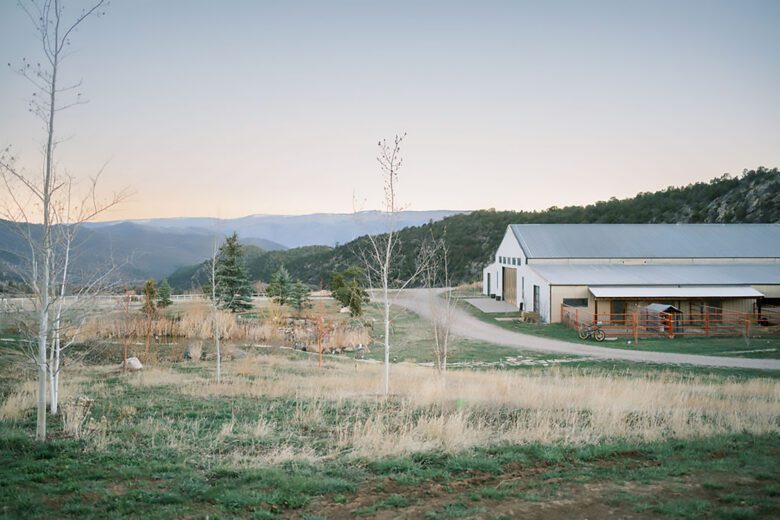
Many women carry the effects of past difficult or traumatic experiences while continuing to manage careers, relationships, and daily responsibilities. For some, ongoing weekly therapy is enough. For others, a period of more structured, focused support may be worth exploring with a clinician. 4Winds Farm is a private, women-only healing campus on 134 secluded acres in Glenwood Springs, Colorado. We offer an integrative approach to trauma recovery that combines licensed clinical therapy with somatic, experiential, and nature-based practices. It is one option among several, intended for appropriate adult women. It is not the right fit for every person, and it does not provide treatment for substance use disorders, acute psychiatric crises, or medical conditions.
Why Some Women Consider Additional Support for Past Trauma
The effects of past trauma don’t always look the way people expect. Some women function well at work and at home while privately managing anxiety, difficulty trusting others, or a sense of unease that doesn’t fully settle. Because daily life can continue to run smoothly on the surface, the underlying distress may be easy to overlook, including by the person experiencing it.
This is one pattern among many, and it doesn’t describe every woman’s experience of trauma. What can be consistent is that outward functioning and inward distress may coexist, and noticing that gap is often a first step toward seeking support.
Why might someone consider more than weekly therapy?
Weekly outpatient therapy is genuinely helpful for many people. For some, ongoing stress at home or work can make it harder to build on progress between sessions, and they may find themselves wanting more concentrated time to focus on their care. In those cases, a retreat, a week-long intensive, or a residential program are options worth discussing with a clinician, alongside rather than necessarily instead of ongoing outpatient care.
Is understanding trauma intellectually enough to feel better?
For some people, understanding their patterns and triggers intellectually is a meaningful and useful step. Others find that insight alone doesn’t fully translate into day-to-day change, and that additional support can help connect what they understand with how they feel and respond. Structured programs, including retreats, intensives, and residential care, are among the options some women consider at this stage, alongside continued individual therapy.
What Residential Trauma-Focused Care Can Look Like
Residential trauma-focused care for women generally combines licensed clinical treatment with a private, structured living environment over an extended stay. At 4Winds Farm, residential programs typically run 30 to 90 days. Because the format reduces many day-to-day distractions, it may allow some women to devote more sustained attention to their care than a weekly outpatient schedule allows. It is not a guarantee of a particular outcome, and it is not the right level of care for everyone.
Trauma can affect emotional regulation and relationships in ways that take time to work through, and the pace of that process varies by person. Weekly sessions provide real benefit for many people. For others, a longer, more contained period of care is something to explore with a clinician’s guidance, based on individual history and current needs.
How is residential care different from a retreat or intensive?
These formats serve different purposes, and the right fit depends on the individual rather than on one format being better than another.
A short retreat or a week-long intensive can be a manageable way to step back briefly without leaving daily responsibilities for an extended period. A longer residential stay is a different kind of commitment, generally considered when someone and their clinical team agree that more sustained time and support could be valuable.
Who might consider a women-only setting?
Some women feel more comfortable exploring sensitive material in a setting made up of women only. That is a personal preference rather than a guarantee about outcomes, and it is one factor among several, alongside clinical approach, credentials, and program structure, worth weighing when considering options.
What Kind of Care Team Is Involved?
At 4Winds Farm, individual trauma therapy is provided by licensed clinicians, including licensed clinical social workers, marriage and family therapists, and professional counselors trained in trauma-focused approaches. Group work and experiential practices are facilitated alongside this clinical care, not in place of it.
What about complex or repeated trauma?
Some people have experienced a single distressing event. Others have experienced prolonged or repeated adverse experiences, such as ongoing childhood adversity or long-term interpersonal harm. Some clinicians use the term “complex trauma” to describe patterns that can follow experiences like these. This is a general clinical concept, not a diagnosis. Any diagnosis should come from a qualified evaluating clinician, and care approaches are adapted individually rather than applied uniformly.
When comparing options, questions worth asking include:
- What therapeutic approaches does the program use, and are they evidence-informed?
- What is the day-to-day environment like?
- What are the credentials and training of the clinical team?
- How does the program adapt its approach for different trauma histories?
These are useful questions for evaluating any program, including 4Winds Farm, rather than a checklist that points to one correct answer.
What Therapies Are Part of an Integrative Approach?
At 4Winds Farm, care may draw on several elements depending on individual needs and clinical judgment: licensed individual trauma therapy, Somatic Experiencing®, nervous-system regulation practices, group integration, equine-assisted experiential therapy, breathwork and other embodied practices, Jungian-informed shadow exploration, and nature-based experiences on the property. Not every element is part of every woman’s plan, and the specific combination is determined together with the clinical team.
Individual therapy provides the clinical foundation. Somatic Experiencing and nervous-system regulation practices attend to bodily sensation and physiological responses alongside verbal processing, offering some people another avenue for working through difficult material. Group integration, equine-assisted therapy, breathwork, and nature-based experiences are experiential complements that some women find useful for engaging with the process in ways that go beyond conversation alone. Jungian-informed shadow work is offered for women interested in a more symbolic or reflective approach to self-understanding.
Where clinically appropriate and only where legally permitted, psychedelic-assisted therapy may also be considered as part of a broader treatment plan, under clinical supervision and appropriate medical oversight.
How does somatic work differ from talk therapy?
Talk therapy relies primarily on conversation and reflection. Somatic approaches also attend to physical sensation and nervous-system responses as part of the therapeutic process. Some people find combining these approaches helpful. Experiences vary, and no single approach works the same way for everyone.
Why include practices like equine therapy or breathwork?
These experiential practices are offered alongside licensed clinical therapy, not as a replacement for it. For some women, engaging the body through movement, breath, or time with horses offers a different way to process experiences than conversation alone. As with any therapeutic approach, individual responses vary.
Which Option Might Fit a Given Situation?
There isn’t one path that fits every woman’s circumstances. A short retreat, a week-long intensive, and a longer residential program serve different needs, and the right starting point depends on someone’s history, current life circumstances, and clinical guidance.
A retreat or intensive can be a reasonable way to explore therapeutic and experiential practices without stepping away from work or family for an extended period. It can also help someone get a sense of an approach before considering something longer. A residential stay is a larger commitment, generally considered when someone and their care team believe that sustained time away from daily obligations could be valuable.
Choosing between these options is best done in conversation with a licensed clinician who can help weigh individual history, current needs, and practical circumstances, rather than defaulting to the most intensive option available.
Is 4Winds Farm the Right Fit?
4Winds Farm is designed for adult women who are considering additional, structured support for the effects of past trauma, in a private, women-only setting. It is one option among many, and it is not the right fit for every person or every situation. Whether it makes sense for a particular individual is a decision best made together with a mental health professional familiar with that person’s history and current needs.
What this program does not provide
4Winds Farm does not provide treatment for substance use disorders, does not serve as an emergency or crisis-stabilization service, and does not provide medical treatment for physical health conditions. Women who are experiencing a mental health crisis, or who need substance use or medical treatment, should contact emergency services or another appropriate provider directly.
Conclusion
In the end, healing from trauma is not about pushing harder or managing symptoms until they quiet down—it is about coming home to yourself, fully and safely. At 4Winds Farm, we hold that process with both clinical care and spiritual depth, offering a secluded space where women can finally exhale. Here, amid 134 acres of Colorado Rockies privacy, the nervous system settles, intuition reawakens, and lasting clarity takes root—not as an escape from life, but as preparation to return to it whole.