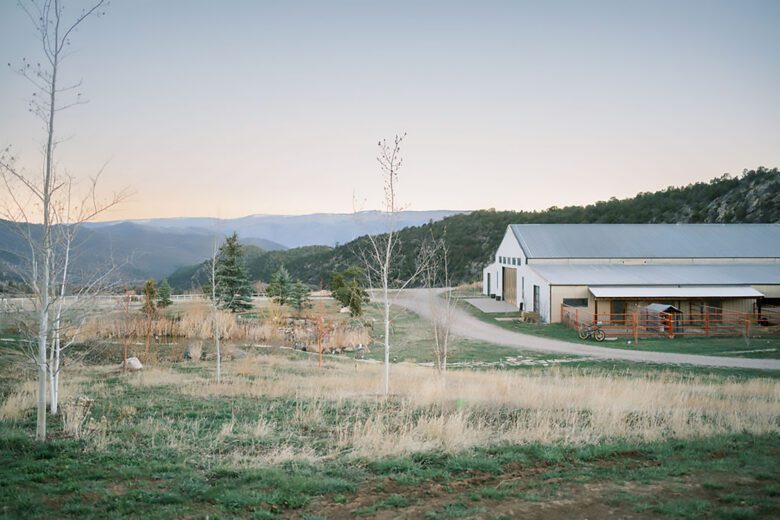

“Long-term” means different things to different people, and it’s worth defining before choosing a program. At 4Winds Farm, a private, women-only healing campus on 134 secluded acres in Glenwood Springs, Colorado, residential programs generally run 30 to 90 days. That is longer than a weekend retreat or a week-long intensive, but it is a defined, time-limited stay, not an open-ended commitment. This article explains what “long-term” typically means in residential mental health care, how residential programs differ from shorter retreat formats, and how women and families can think through whether extended residential care may be a good fit.
What Does “Long-Term” Mean in Residential Treatment?
In the context of residential mental health care, “long-term” is a relative term. Compared with a single therapy session or a weekend workshop, a multi-week residential stay offers considerably more time. Compared with inpatient hospital stays or extended clinical programs measured in months or years, 30 to 90 days is a moderate window.
At 4Winds Farm, program length is not fixed in advance for every client. Because everyone’s history, goals, and circumstances are different, the appropriate length of stay is something to work out with a licensed clinician as part of an individual assessment, not something a single article or general guideline can determine.
Why might someone consider more time than a single session or short retreat offers?
Some women feel that once-a-week therapy, while valuable, doesn’t give them enough uninterrupted time to focus on themselves away from daily responsibilities. Others have attended a retreat or an intensive and want to continue that work in a more structured, extended setting. There is no single “right” reason to consider residential care, and weekly therapy remains a meaningful and often sufficient form of support for many people. Extended residential care is simply a different option, suited to different circumstances and best evaluated with a mental health professional.
Short Retreats, Week-Long Intensives, and Residential Care: What’s the Difference?
These terms are sometimes used loosely, so it helps to separate them clearly.
4Winds Farm offers both a week-long healing intensive and longer residential programs; these are distinct offerings with different goals, and a clinician can help determine which format fits a given situation. A short retreat or intensive can be valuable on its own and does not need to lead to a longer stay.
Who Might Consider Residential Trauma Care?
There is no universal checklist that determines whether someone needs residential care; that determination belongs to a licensed clinician working with the individual. That said, some women and families exploring this option are navigating experiences such as:
- A history of trauma that feels unresolved despite prior therapy or self-work
- Chronic stress, burnout, or emotional exhaustion that hasn’t eased with typical routines
- A desire for a period of focused time away from daily obligations, alongside clinical support
- Interest in combining talk-based therapy with body-based and experiential approaches
If some of these resonate, the next step is a conversation with a mental health professional, not a self-diagnosis. A clinician can help assess whether residential care, continued outpatient therapy, a different level of care, or some combination is the better fit.
4Winds Farm’s programs are designed for women working through trauma-related and stress-related concerns in a residential setting. The program is not a hospital, a substance use treatment program, or a crisis service, and it is not designed to manage acute psychiatric emergencies or medical conditions. Admissions staff can help determine whether a referral elsewhere may be more appropriate for a given situation.
What Happens During Residential Treatment at 4Winds Farm?
Residential care at 4Winds Farm brings together several kinds of support over the course of a stay. Depending on the individual treatment plan, this may include:
- Licensed individual trauma therapy with a mental health clinician
- Somatic Experiencing®, an approach that works with the body’s stress responses alongside talk-based therapy
- Practices aimed at supporting nervous system regulation, including breathwork and other embodied techniques
- Group sessions focused on integration and shared support among clients
- Equine-assisted experiential therapy
- Jungian-informed exploration of unconscious patterns, sometimes described as shadow work
- Time spent in nature as part of the daily rhythm of the program
For some clients, and only where clinically appropriate and legally supported, psychedelic-assisted therapy may also be offered as one part of a broader treatment plan, under clinical supervision. It is not a component of every client’s care.
The combination of these elements is intended to let clinical work and experiential, body-based work happen alongside each other. Experiences and outcomes vary by individual.
Why a Private, Women-Only Setting?
4Winds Farm serves women only, on a private campus spread across 134 acres outside Glenwood Springs, Colorado. For some clients, being in a setting with other women working through similar kinds of experiences, away from public visibility, can make it easier to be open in therapy and group sessions. A private, women-only environment is not the right fit for everyone, and other programs and settings can also offer meaningful, effective care. The value of a particular setting depends on individual preference and clinical judgment.
The size of the property allows for time outdoors, quiet space between sessions, and a slower daily pace than many clients experience at home. These are features of the environment, not guarantees about what any individual will experience.
How Long Should a Program Last?
There is no fixed answer, and longer is not automatically better. The right length of stay depends on the individual’s history, goals, current circumstances, and the recommendation of a licensed clinician involved in their care. Some clients may find that a shorter intensive suits them best; others may want the full 30- to 90-day range that 4Winds Farm’s residential program generally spans. Some may find that returning to a shorter format periodically, alongside ongoing outpatient therapy at home, works better for their life.
Families and individuals considering this decision should treat program length as a clinical question to discuss with an admissions team and, where possible, an existing therapist, rather than assuming that more time automatically produces a better result.
Choosing the Right Level of Care
When evaluating any residential program, it can help to ask:
- Is the treatment plan developed and overseen by licensed clinicians?
- Does the program clearly explain what conditions and concerns it is, and is not, equipped to address?
- Is there a clear process for referring clients elsewhere if a higher level of care, such as hospitalization or substance use treatment, is needed?
- Does the setting and daily structure match what the individual is looking for, whether that’s privacy, a women-only environment, time in nature, or a specific therapeutic approach?
- Is the recommended length of stay based on an individual assessment rather than a one-size-fits-all program length?
A thoughtful answer to these questions matters more than the length of the program on its own.
A Note on Next Steps
Choosing whether, and for how long, to pursue residential care is a personal decision best made in conversation with a mental health professional. This article is intended as general information, not a clinical recommendation for any individual.
Long-term residential treatment is one possible level of care, and program length should be based on individual needs and clinical recommendations. To ask whether a current 4Winds Farm program may fit your needs, call 970-279-1114 or email admissions@4winds.farm.