What Is Integrative Trauma Healing?
Integrative trauma healing approaches the mind, body, and spirit as connected parts of a woman’s experience rather than treating each in isolation. Trauma can affect emotional wellbeing, physical sensations, and a sense of connection or meaning, and for some women, addressing more than thought patterns alone can be a meaningful part of recovery.
At 4Winds Farm, this philosophy shapes how programs are designed. Women’s trauma therapy here combines licensed clinical mental health care with complementary somatic, experiential, and nature-based practices. Licensed therapy is provided by trained clinicians; complementary offerings support that clinical care but are not a substitute for it.
Why Combine Licensed Care With Complementary Practices?
No single approach works the same way for every woman. Licensed therapy can help address thought patterns and processing, while complementary practices, such as somatic work, nervous-system regulation techniques, and experiential therapies, may support other aspects of a woman’s experience. Combining licensed care with complementary offerings gives some women more than one way to engage with recovery; it is not presented as a faster or superior path, only a different, more integrated one.
How Do Clinical Care and Complementary Practices Work Together?
At 4Winds Farm, licensed clinical mental health care remains the foundation of treatment. Complementary practices, including somatic, experiential, spiritual, and nature-based approaches, are offered alongside that care, built into an individualized plan rather than used as standalone treatment. This distinction matters: a woman’s clinical needs are addressed by licensed providers, while complementary offerings provide additional, supportive ways to engage with the process.
For women researching an integrative trauma therapy Colorado program, understanding this distinction between licensed and complementary care is a useful first question to ask any provider.
An integrative plan at 4Winds Farm may draw from:
- Licensed individual trauma therapy, provided by trained clinicians
- Complementary somatic and nervous-system-focused practices
- Complementary experiential offerings, such as equine-assisted therapy and group integration
- Nature-based experiences as part of the overall program
Recognizing the Need for Support Behind High Functioning
Women who appear capable and high-functioning in daily life can still be carrying unresolved trauma. A woman may manage a household, lead a team at work, and support everyone around her, while privately carrying pain that isn’t visible to others. This gap between outward capability and inner experience is something 4Winds Farm’s programs are designed to take seriously.
What Can Happen When Trauma Goes Unaddressed?
For some women, unprocessed trauma can contribute to exhaustion, disconnection, self-doubt, or a persistent sense of unease, even when life looks successful from the outside. These experiences vary from woman to woman, and not every woman will notice the same effects.
Why Capability Can Mask the Need for Support
When a woman appears to be managing well, it can be easy for her, and for the people around her, to assume everything is fine. That assumption can delay a woman from seeking support. An integrative approach to holistic trauma healing for women aims to consider the whole person, not only visible signs of distress.
A woman does not need to be in visible crisis to consider trauma-focused care. Questions worth asking any program include:
- How does the program distinguish licensed clinical treatment from complementary offerings?
- How is confidentiality protected for women who value privacy?
- How is a plan of care individualized rather than applied the same way to every woman?
What Complementary Therapies Support Somatic Trauma Recovery?
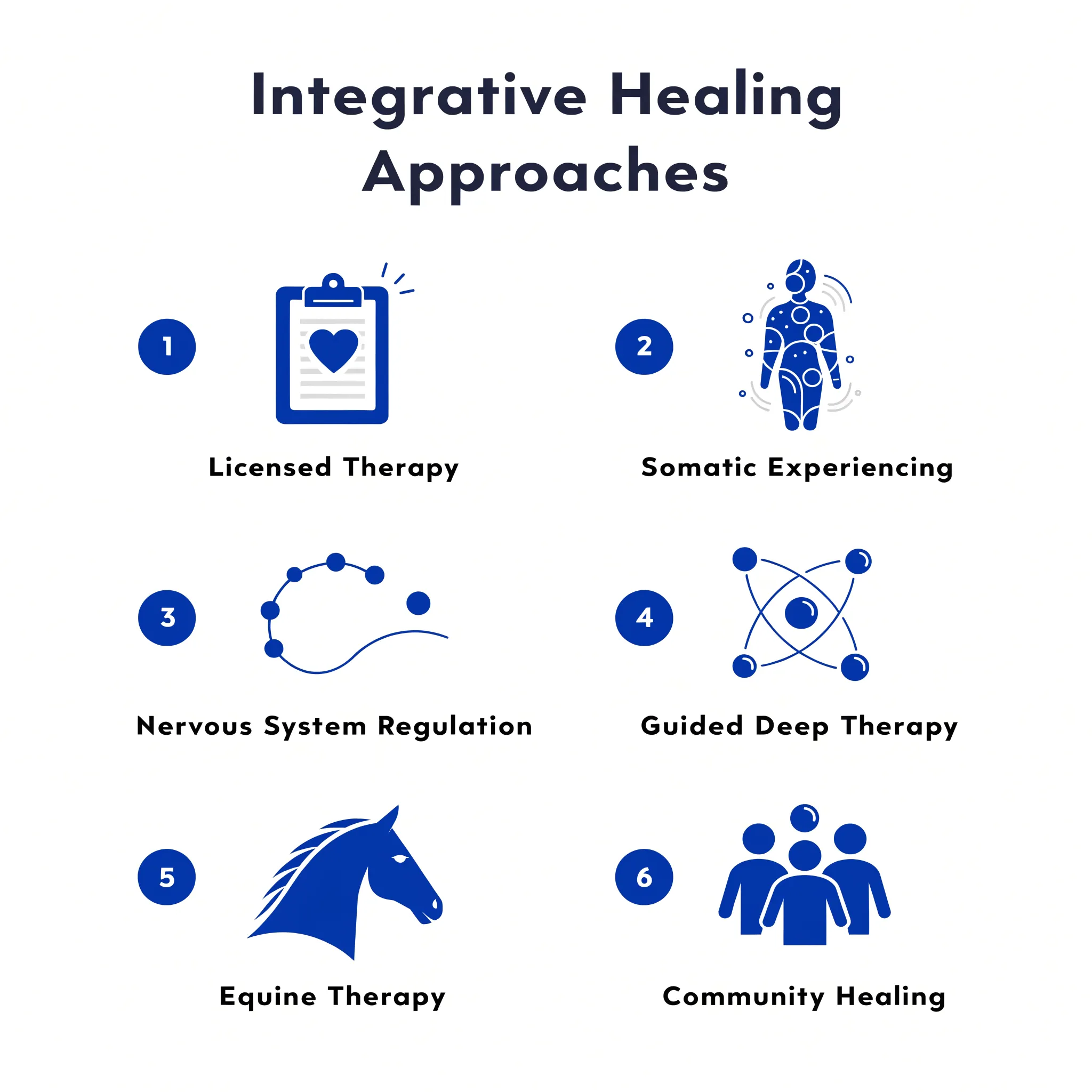
At 4Winds Farm, licensed individual trauma therapy is complemented by a range of somatic, experiential, and nature-based practices. These offerings are built into an individualized plan alongside, not in place of, licensed clinical treatment, and the specific mix depends on each woman’s needs.
Complementary offerings can include Somatic Experiencing®, nervous-system regulation practices, breathwork and other embodied practices, equine-assisted experiential therapy, Jungian-informed shadow exploration, group integration, and time in nature. Where clinically appropriate and legally supported, psychedelic-assisted therapy may also be offered under professional supervision, as one part of a broader, individualized plan, not as a standard or universal component of care.
Somatic and Nervous-System-Focused Practices
Somatic Experiencing® and nervous-system regulation practices focus on body awareness and self-regulation skills. For some women, these practices can be a helpful complement to licensed therapy; they are not presented as a cure or a guaranteed outcome, and results vary by individual.
Experiential and Reflective Practices
Equine-assisted experiential therapy, group integration, breathwork, and Jungian-informed shadow exploration offer additional, complementary ways for women to engage with recovery outside a traditional therapy office. Time in nature is also part of the overall program.
A woman’s individualized plan may draw from:
- Licensed individual trauma therapy: provided by trained clinicians, the clinical foundation of care
- Somatic Experiencing®: a complementary, body-awareness-based practice
- Nervous-system regulation practices: complementary tools some women find supportive
- Breathwork and embodied practices: complementary experiential offerings
- Equine-assisted experiential therapy: complementary, trust-and-connection-based practice
- Jungian-informed shadow exploration: complementary reflective practice
- Group integration and nature-based experiences: shared, experiential parts of the program
- Psychedelic-assisted therapy: offered only where clinically appropriate and legally supported, under professional supervision
No single practice is presented as sufficient on its own. A plan is typically built from licensed care combined with a selection of complementary offerings suited to the individual.
Understanding Program Formats: Retreats, Intensives, and Residential Care
4Winds Farm offers different program formats to fit different needs, including short retreats, week-long intensives, and longer residential programs, sometimes described as a women’s residential trauma retreat, that generally run 30 to 90 days.
Short retreats and week-long intensives offer a brief, structured step away from daily routine. Residential programs, which generally run 30 to 90 days, provide an extended period of licensed clinical care combined with complementary practices, on a private, women-only campus.
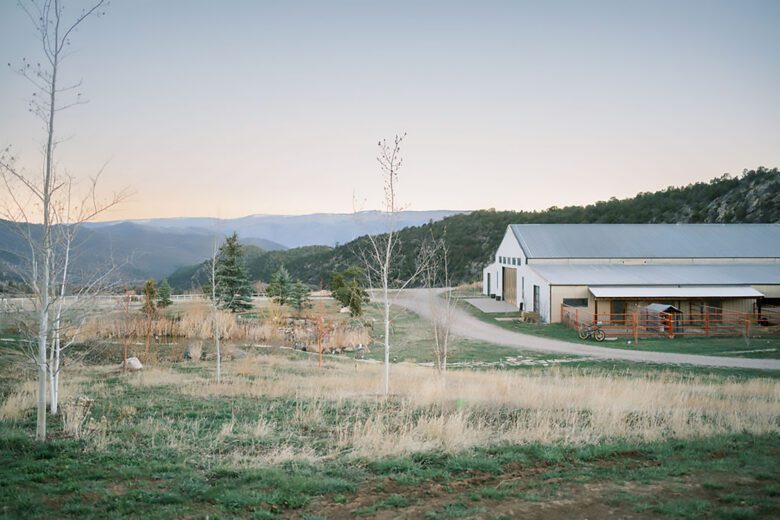
The 4Winds Farm campus sits on 134 secluded acres near Glenwood Springs, Colorado. Clinicians, facilitators, and a small community of peers are part of the residential experience.
Why Might a Longer Stay Be Considered?
For some women, a longer, structured stay can allow more time to engage with both licensed therapy and complementary practices than a single weekly session provides. This does not mean that outpatient or weekly therapy is ineffective; for many people, ongoing outpatient care is an appropriate and effective form of treatment. A longer residential stay is simply a different format that may suit particular circumstances and preferences.
What Does a Private, Secluded Setting Offer?
A secluded, women-only setting can offer privacy away from daily work and caregiving roles. This setting is intended to support focus during treatment, though how helpful that is will vary from woman to woman.
A residential stay at 4Winds Farm can include:
- Licensed clinical care combined with complementary practices, integrated into a daily schedule
- A private, women-only campus in Glenwood Springs, Colorado
- A program length that generally runs 30 to 90 days, depending on individual circumstances
- A small community of peers alongside individual clinical care
4Winds Farm’s programs focus on trauma-related mental health care. They are not designed to treat substance use disorders, acute psychiatric emergencies, or medical conditions requiring hospitalization; women with these needs should seek care from an appropriate crisis or medical provider.
How Do You Choose the Right Format?
The right format depends on how much time, privacy, and depth a woman is looking for right now. Some women carry unresolved trauma quietly for years while managing work and family. Others reach a point where they want to step away from daily life for a period of focused care. Matching the format to current circumstances matters more than choosing whichever program looks the most intensive.
What’s the Difference Between a Retreat and Residential Care?
A short retreat or week-long intensive offers a brief, structured step away from routine and can suit women with limited time or those wanting to try a shorter program first. Residential care, generally running 30 to 90 days, involves an extended stay and a different level of commitment. Each format serves a different purpose, and the right choice depends on individual circumstances rather than one format being inherently better than another.
4Winds Farm combines licensed clinical care with complementary somatic, experiential, and nature-based practices across each of these formats, on a secluded, women-only campus.
Frequently Asked Questions
What makes 4Winds Farm’s approach to women’s trauma therapy different?
4Winds Farm combines licensed clinical mental health care with complementary somatic, experiential, and nature-based practices, rather than relying on talk therapy alone. Licensed clinicians provide the clinical treatment; complementary offerings are built in alongside it, not in place of it.
Is a residential program appropriate for a woman who still seems to be functioning well in daily life?
A woman does not need to be in visible crisis to consider trauma-focused care. Some women who appear capable and high-functioning are still carrying unresolved trauma. Whether a residential program, retreat, or intensive is the right fit depends on individual circumstances and is best discussed directly with the admissions team.
What complementary therapies are offered at 4Winds Farm?
Complementary offerings can include Somatic Experiencing®, nervous-system regulation practices, breathwork and embodied practices, equine-assisted experiential therapy, Jungian-informed shadow exploration, group integration, and nature-based experiences. Where clinically appropriate and legally supported, psychedelic-assisted therapy may also be offered under professional supervision. These practices are complementary to, and not a substitute for, licensed clinical therapy.
How long do programs at 4Winds Farm typically last?
4Winds Farm offers short retreats, week-long intensives, and residential programs, which generally run 30 to 90 days. The right length depends on a woman’s individual circumstances and the recommendations of the clinical team.
Where is 4Winds Farm located, and what care does it not provide?
4Winds Farm is a private, women-only campus on 134 secluded acres near Glenwood Springs, Colorado. The program focuses on trauma-related mental health care and does not provide treatment for substance use disorders, acute psychiatric emergencies, or medical conditions requiring hospitalization. Women with these needs should contact an appropriate crisis or medical service.
How can I learn more or get in touch?
You can call 970-279-1114 or email admissions@4winds.farm to learn more about programs at 4Winds Farm.
Conclusion
In closing, integrative trauma healing asks for more than symptom management—it calls for a space where clinical insight and somatic wisdom meet, where the nervous system finally exhales. At 4Winds Farm, that space takes the form of a private, women-only campus in the Colorado Rockies, where licensed therapy, somatic practices, and community support weave together on 134 acres of intentional privacy. Here, healing becomes whole, lasting, and truly your own.